|
|
|
|
Facts About Fertility |
|
|
|
|
|
|
|
|
 |
|
|
|
| "Reach high, for stars lie hidden in your soul. Dream deep, for every dream precedes the goal." |
|
| -Pamela Vaull Starr |
|
|
|
|
|
|
|
|
|
|
|
|
|
 |
|
| Fertility Facts |
How much do we really know about fertility?
|
Learn some of the facts
Here! |
|
|
|
|
Fertility Declines With Age
Even though fertility declines for both men and women with age, for men it's a much slower process. For women on the other hand, fertility declines faster than many of us may think. The American Society for Reproductive Medicine Fact Sheet "Reproductive Aging in Women" states that in most women fertility peaks in their 20s and then it starts to progressively decline between the ages of 31-42 such that women in their early 40s start the transition from the reproductive years to the menopausal period. According to the Center for Disease Control, once a woman turns 42 years old the chances of her having a baby using her own eggs are less than 10%. At age 40, half of her eggs have abnormal chromosomes and in women age 42, 90% of the eggs are abnormal.
So, how much do we really know about fertility?
A survey used to measure fertility knowledge conducted at the iVillage.com website by the American Fertility Association (AFA) showed that out of the 12,524 respondents, only a small percentage of those participating in the survey realized that the natural decline in fertility happens at a much earlier age than many believe. One of the questions from the survey "At what age does a woman's fertility start to measurably decline", only 13% got it right (age 27); 39% thought it began to drop at the age of 40.
In another question "When is a couple considered infertile (unable to conceive)?" 42% answered after 30 months of trying to conceive without success, but the answer to this question according to the The American Society of Reproductive Medicine (ASRM) is if you are a woman age 35 or older trying to conceive, you should consult a fertility specialist if you fail to get pregnant after six months of unprotected intercourse. Women ages 37 to 40 should wait no longer than three months. The survey showed that the majority of the general population has a misconception on when fertility starts to decline.
Infertility Due to Medical Factors
Even though age can be a major cause for a woman's inability to conceive, infertility due to medical factors amounts to 10% of the population of reproductive age, which accounts for 6.1 million men and women in the United States.
Infertility can be caused by a disease associated with the reproductive system and according to the American Society for Reproductive Medicine, infertility affects men and women in almost equal frequency and 25% of infertile couples have more than one medical factor that contributes to their infertility.
"In approximately 40% of infertile couples, the male partner is either the sole cause or a contributing cause of infertility. Tubal blockage and/or peritoneal factors account for approximately 35% of all female infertility problems. Irregular or abnormal ovulation accounts for approximately 25% of all female infertility cases. Endometriosis is found in about 35% of infertile women who have laparoscopy as part of their infertility work-up. Approximately 20% of couples who have a complete work-up are diagnosed with unexplained infertility because no specific cause is identified." (Source: Infertility (PDF) released December 1997)
|
|
|
| The Miracles Waiting, LLC. Team |
The Information provided in this page is for educational purposes only and you should not rely on it as a substitute for professional assistance. If you are concerned about your health or the health of a loved one please seek the help of a medical care provider.
|
|
|
|
 |
|
|
 |
|
|
|
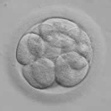
Nearly 400,000 embryos are stored in the United States,
88.2% are targeted for patient use, and
2.8% are available for research.
FERTILITY AND STERILITY |
|
|